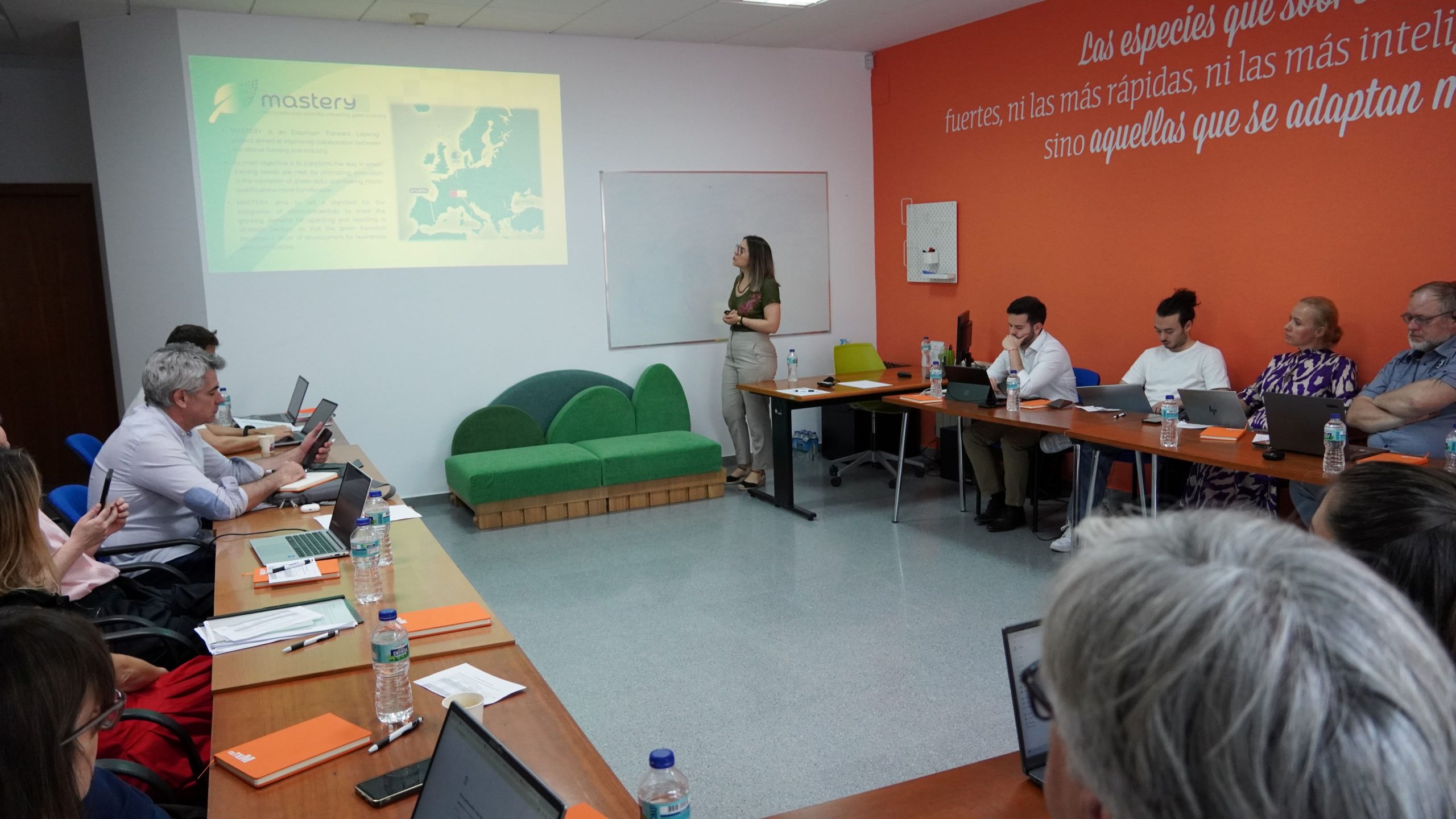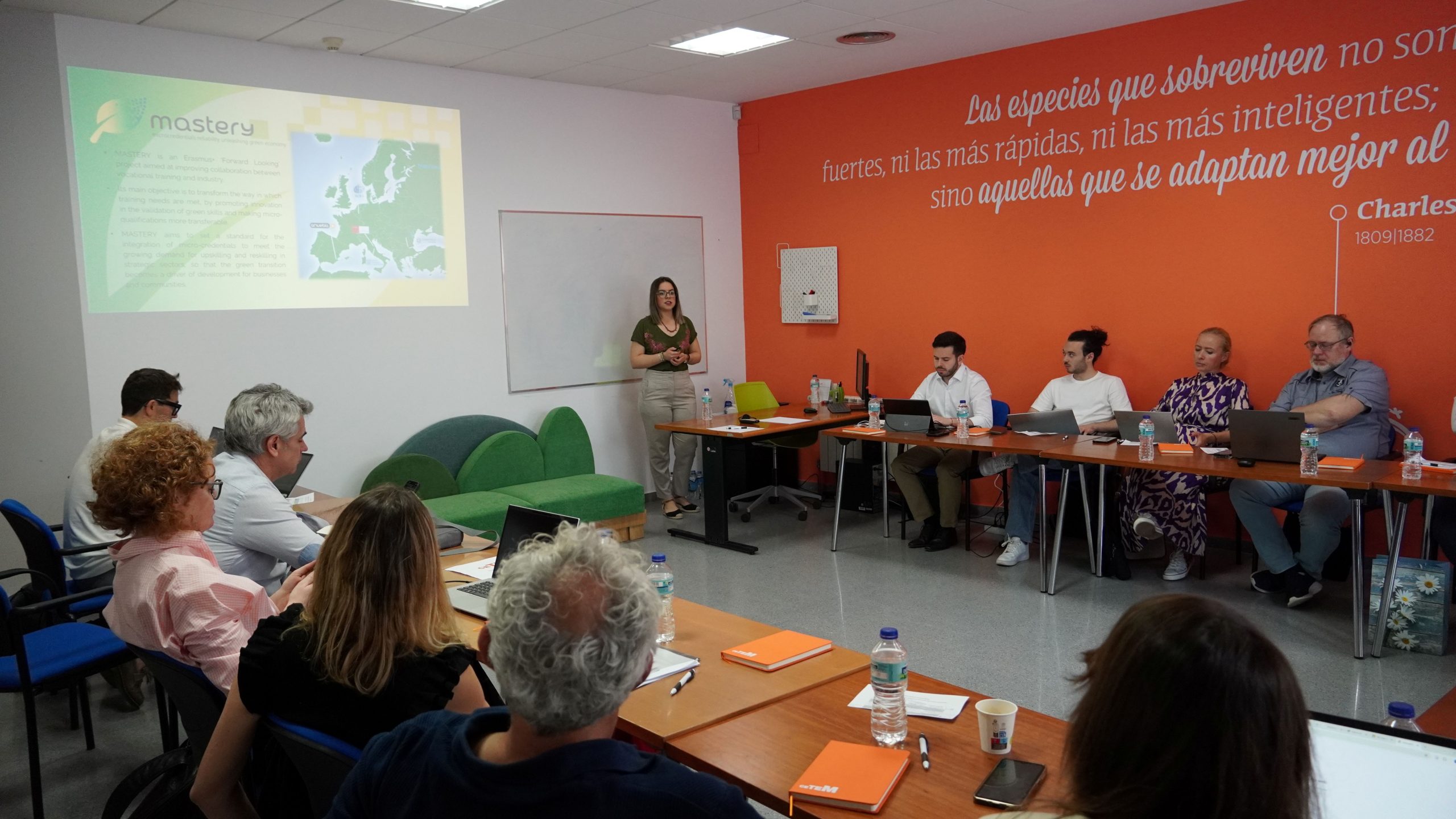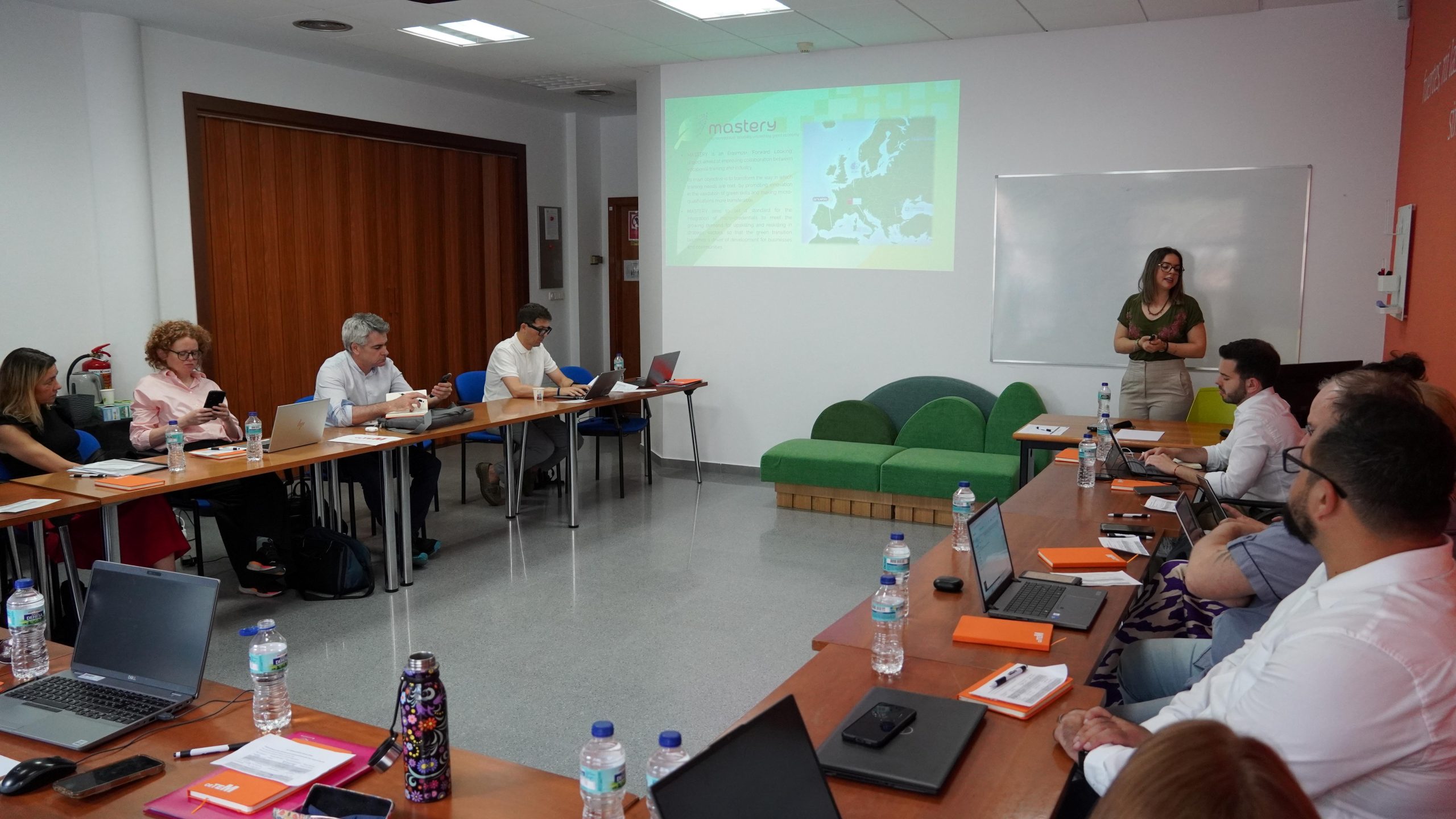
AMUEBLA, in collaboration with CETEM, has held the final dissemination event for the GS10 pilot project – “Implementing circular, eco-friendly and socially responsible procurement” – which was carried out as part of the European Erasmus+ Forward Looking MASTERY project – Micro-credentials Empowering Sustainable Skills.
The event took place on 3 June 2026 in Yecla (Murcia), following the completion of a pilot training programme aimed at promoting new green skills related to sustainable public procurement, the circular economy, environmental, social and governance (ESG) criteria, and responsible purchasing.
During the event, AMUEBLA and CETEM presented the key findings from the pilot scheme, as well as the training methodologies used, the evidence-based assessment system and the micro-credential model developed by the MASTERY project to recognise specific learning outcomes linked to the green transition.
The pilot scheme enabled participants to gain practical experience in designing sustainable public tenders, incorporating European and national regulations, public procurement principles, circular economy criteria, life-cycle costing, supplier assessment and ESG requirements. Through this practical approach, participants were able to link the course content to real-life situations relating to responsible public and private procurement.
The event brought together 12 participants from various organisations, creating a forum for international dialogue on the role of sustainable procurement as a strategic tool for driving the green transition, innovation and social responsibility.
The session included presentations, practical examples and discussions on green skills, career prospects and sustainable public procurement. Attendees reflected on how procurement decisions can generate positive environmental, social and economic impacts, as well as on the importance of training future professionals to integrate sustainability into procurement and supplier management processes.
Through this initiative, AMUEBLA and CETEM continue to contribute to the development of new European models of flexible, practical and innovative training, reinforcing the value of micro-credentials as a tool for recognising green skills, promoting employability and supporting reskilling and upskilling processes in the context of the green transition.

Funded by the European Union. Views and opinions expressed are however those of the author(s) only and do not necessarily reflect those of the European Union or the European Education and Culture Executive Agency (EACEA). Neither the European Union nor EACEA can be held responsible for them.